Let’s say the quiet part out loud:
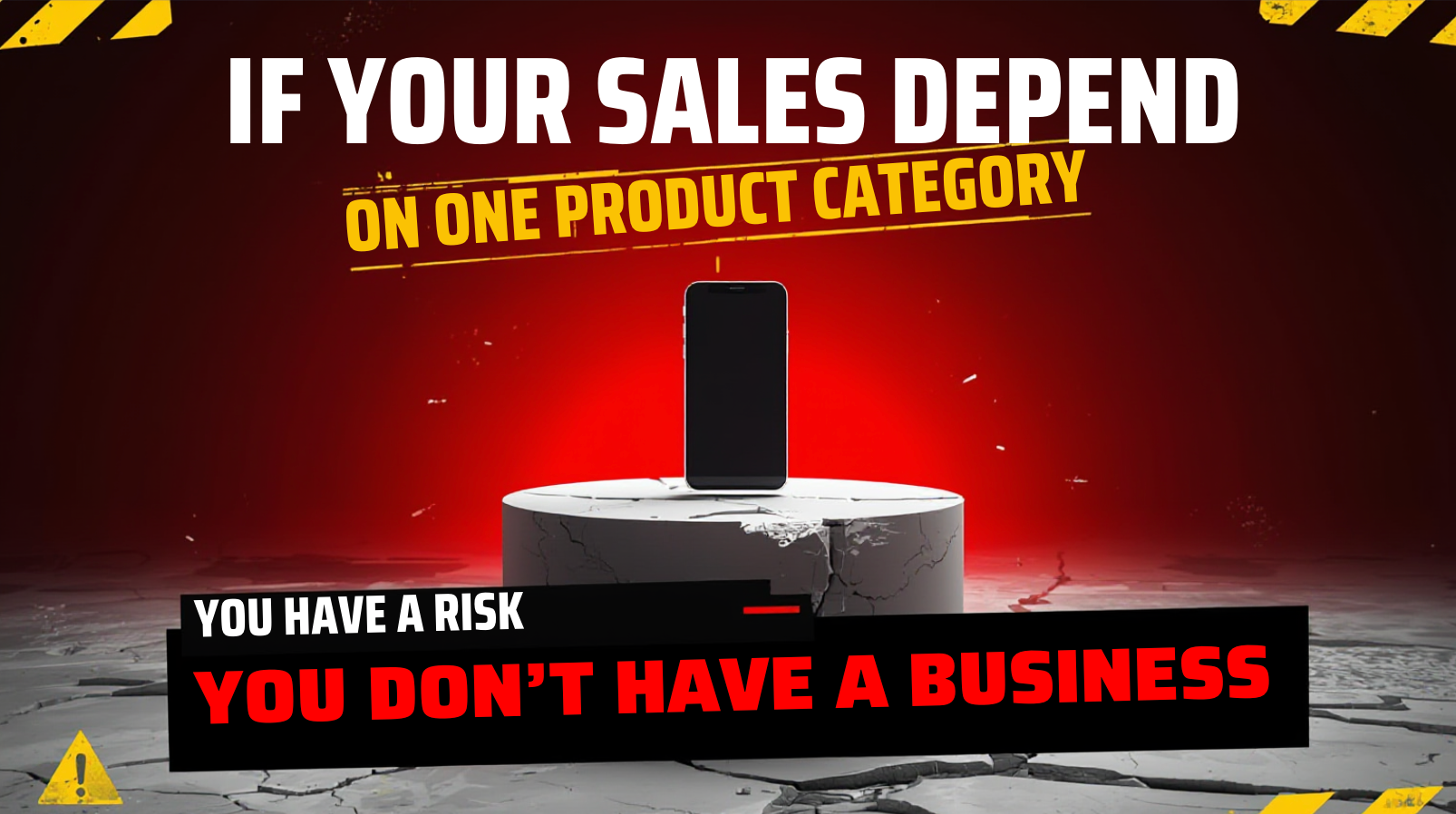
If one product category disappearing can cripple your shop, you were never running a stable business — you were running a temporary opportunity.
And a lot of smoke shops are learning that lesson the hard way right now.
For years, intoxicating hemp masked weak sales systems, poor diversification, and lazy execution. When that category printed money, nobody questioned the structure underneath.
Now that the pressure is on, the truth is exposed.
Why Category Dependence Feels Safe (Until It Isn’t)
Category dependence usually starts innocently:
-
One product sells really well
-
Margins are strong
-
Customers come in specifically for it
-
Employees don’t have to explain much
-
Revenue feels predictable
So owners lean into it.
They buy deeper.
They market harder.
They reorganize the store around it.
They train employees only on that category.
They market harder.
They reorganize the store around it.
They train employees only on that category.
And slowly, without realizing it, the shop becomes fragile.
The Illusion of Stability
Here’s why category dependence fools owners:
Revenue looks good — until it doesn’t.
Traffic looks steady — until it drops.
Margins look healthy — until legislation hits.
Traffic looks steady — until it drops.
Margins look healthy — until legislation hits.
But stability that depends on one thing is not stability.
It’s concentration risk.
And retail punishes concentration risk ruthlessly.
What Happens When the Pillar Cracks
When a dominant category is restricted, banned, or fades:
-
customers stop coming in as often
-
employees freeze
-
conversations die
-
upsells vanish
-
average ticket drops
-
panic sets in
-
bad decisions follow
The shop scrambles for replacement products instead of fixing execution.
That’s backwards.
Why New Products Alone Won’t Save You
Most owners react to category loss by asking:
“What’s the next hot product?”
That question is dangerous.
New products don’t fix:
-
poor sales conversations
-
lack of confidence
-
weak attachments
-
inconsistent execution
-
employee hesitation
If you plug a new category into a broken sales system, you’ll break the new category too.
The Difference Between Product Sales and Solution Sales
Category-dependent shops sell products.
Resilient shops sell solutions.
Products change.
Solutions don’t.
Solutions don’t.
Customers don’t come in wanting:
-
Delta-8
-
HHC
-
THC-A
-
whatever’s trending next
They want:
-
relaxation
-
energy
-
focus
-
sleep
-
stress relief
-
smoother hits
-
convenience
When employees sell outcomes instead of SKUs, category changes become manageable.
Why Employees Struggle During Category Shifts
Employees panic when categories change because:
-
they memorized products, not frameworks
-
they relied on familiarity
-
they never learned how to pivot conversations
-
they don’t know how to guide confused customers
That’s not an employee failure.
That’s a training failure.
How to Build Category Resilience Into Your Sales Floor
You don’t fix category risk with inventory.
You fix it with training and structure.
Here’s how resilient shops operate.
1. Employees Lead With Intent, Not Product Names
Instead of asking:
-
“What are you looking for?”
They ask:
-
“What kind of vibe are you going for?”
That single shift makes your shop adaptable forever.
2. Multiple Categories Serve the Same Outcome
A resilient shop can offer:
-
2–3 ways to relax
-
2–3 ways to focus
-
2–3 ways to unwind
-
2–3 ways to boost energy
If one category disappears, another fills the gap.
3. Employees Are Trained to Pivot, Not Freeze
When customers say:
-
“What replaces what I used before?”
Trained employees don’t panic.
They guide.
4. Attachments Are Category-Agnostic
Accessories, maintenance, storage, and protection work with everything.
That revenue doesn’t vanish when categories change.
5. The Conversation System Is Stronger Than Any Product
If your sales floor runs on a conversation system, products can rotate without chaos.
What Category Diversification Actually Looks Like
Real diversification is not:
-
stocking a lot of SKUs
-
chasing trends
-
hoping something sticks
Real diversification is:
-
training employees across categories
-
selling experiences instead of products
-
cross-selling naturally
-
normalizing attachments
-
controlling conversations
You don’t need more inventory.
You need better execution.
Why Owners Resist This (And Why It’s Risky)
Owners resist diversification because:
-
one category is easy
-
training takes time
-
change feels uncomfortable
-
it exposes weaknesses
-
it requires leadership
But avoiding diversification guarantees pain later.
The Owner’s Role in Reducing Sales Risk
Owners must:
-
stop building around one pillar
-
stop letting employees specialize too narrowly
-
train outcome-based selling
-
enforce conversation structure
-
track category contribution
-
adjust proactively instead of reactively
This is not about being trendy.
It’s about survival.
What Resilient Shops Look Like in Practice
Resilient shops:
-
stay calm during industry changes
-
keep traffic flowing
-
maintain average ticket
-
pivot conversations smoothly
-
don’t panic buy inventory
-
don’t slash prices
-
don’t blame staff
They adapt because they trained for it.
Final Thought
If one category can break your business, your business was already broken.
Category shifts are inevitable.
The only question is whether your shop is prepared — or exposed.
Build a sales system that outlives products.
Because trends fade.
Execution lasts.