
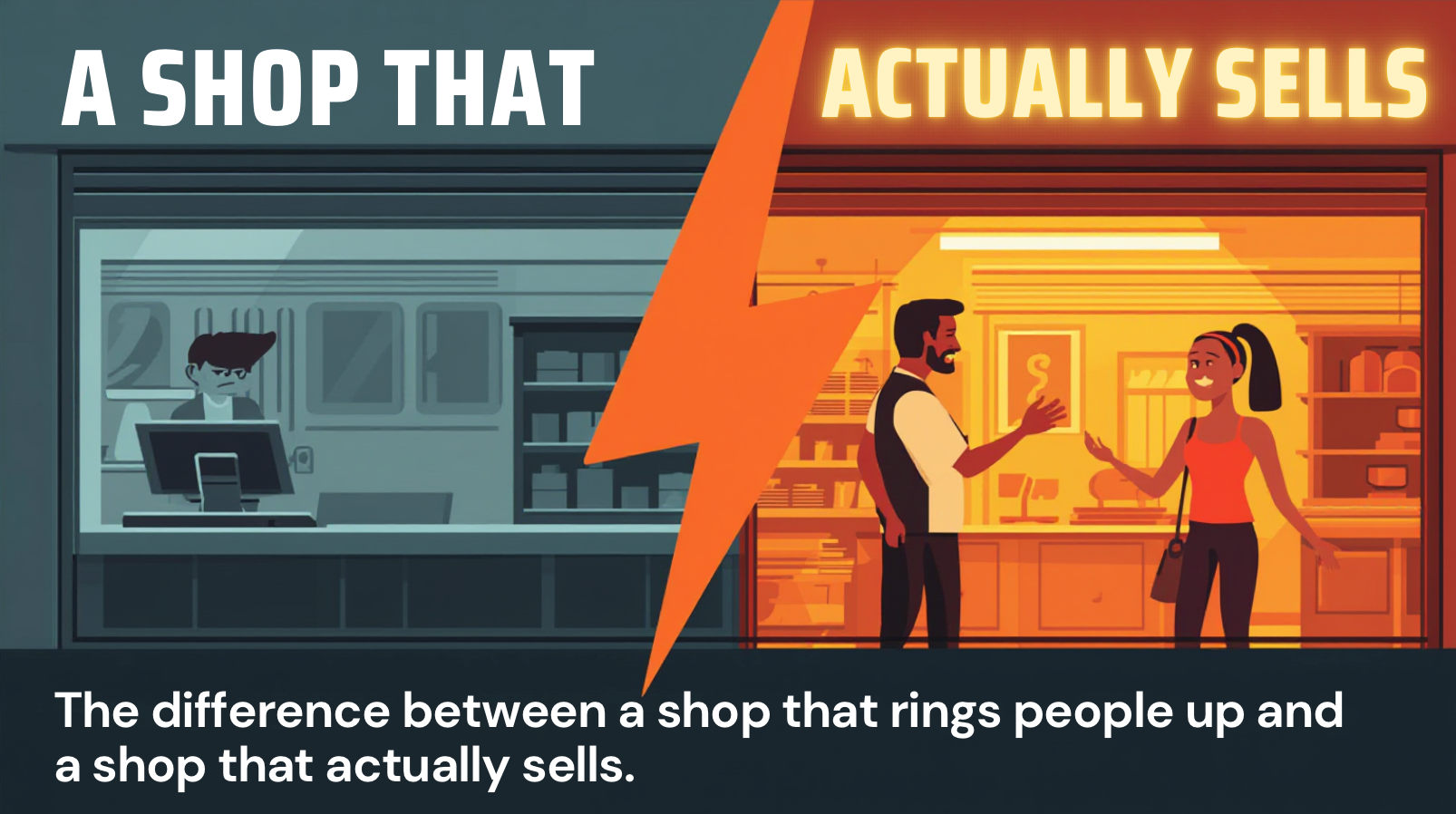
Most smoke shop owners think they’re running a sales business.
In reality, a lot of shops are just running a checkout counter with inventory around it.
There’s a massive difference between:
-
a shop that rings people up, and
-
a shop that actively sells
And that difference is the gap between surviving pressure… and slowly bleeding revenue without realizing why.
Ringing People Up Feels Busy — Selling Creates Money
Here’s why this problem goes unnoticed:
A ring-up shop still looks active.
-
The register is beeping
-
People are walking in and out
-
Employees are moving
-
Money is coming in
So owners assume things are “fine.”
But what’s actually happening is this:
Customers are making all the decisions themselves, and your employees are just there to process payment.
That’s not sales.
That’s order fulfillment.
What a Ring-Up Shop Looks Like on the Floor
If your shop operates like this, you’re in ring-up mode:
-
Employees stay behind the counter
-
Conversations start only when customers approach
-
Employees wait to be asked questions
-
Products are pointed at, not presented
-
One item is sold when three would make sense
-
Accessories are rarely attached
-
The cheapest option gets picked too often
-
Employees say “Let me know if you need anything” and disengage
Ring-up shops are reactive.
They wait for customers to do the work.
Why Ring-Up Mode Is Dangerous Right Now
Ring-up mode worked when:
-
One category dominated sales
-
Customers already knew what they wanted
-
Margins covered inefficiency
-
Product demand was predictable
That era is over.
Now:
-
Customers are confused
-
Categories are shifting
-
Trust matters more
-
Employees must guide
-
One-item sales hurt more than ever
If your store stays in ring-up mode, revenue erosion is inevitable.
What a Selling Shop Looks Like Instead
A shop that actually sells looks very different — even if the inventory is the same.
Selling shops:
-
Initiate conversations immediately
-
Ask intentional questions
-
Walk customers to products
-
Present structured options
-
Control the pace of the interaction
-
Build confidence through guidance
-
Normalize add-ons and attachments
-
Close with intention
Nothing feels pushy.
Everything feels professional.
The Biggest Myth Owners Believe About Selling
A lot of owners say:
“I don’t want my shop to feel salesy.”
Here’s the truth:
Shops don’t feel salesy when employees are trained — they feel chaotic when they’re not.
Selling done correctly feels like help.
Selling done poorly feels like pressure.
The difference isn’t the act — it’s the execution.
Why Customers Actually Want to Be Sold (Yes, Really)
Customers don’t walk into a smoke shop wanting to:
-
research
-
guess
-
compare dozens of options
-
risk buying the wrong thing
They want clarity.
They want confidence.
They want someone to say:
“Based on what you told me, this is the right move.”
When no one guides them, they default to:
-
the cheapest option
-
something familiar
-
or nothing at all
That’s lost opportunity.
The Three Critical Shifts Owners Must Make
To move from ring-up to selling, owners must shift three things.
Shift #1 — From Counter-Based to Floor-Based
Sales don’t happen at the counter.
They happen on the floor.
They happen on the floor.
If employees are glued to the counter, they are too late.
Selling shops:
-
greet customers immediately
-
engage before decisions are made
-
guide the journey instead of reacting to it
Shift #2 — From Answering to Leading
Answering questions is passive.
Leading is active.
Selling shops:
-
ask first
-
narrow options
-
shape decisions
-
build confidence
Ring-up shops wait for customers to drive.
Shift #3 — From Single Items to Complete Solutions
Ringing people up focuses on one item.
Selling focuses on the entire experience.
That means:
-
accessories
-
upgrades
-
maintenance items
-
protection items
-
complementary products
Customers don’t need more stuff — they need complete setups.
Why Employees Default to Ring-Up Mode
Employees ring people up because:
-
it’s safer
-
it’s easier
-
it requires less confidence
-
it avoids rejection
-
it avoids responsibility
Without training, ring-up mode feels like the safest path.
Selling requires structure.
And structure must come from the owner.
What Owners Get Wrong About “Pushy” Employees
Owners worry that selling means pressure.
But pressure happens when employees:
-
improvise
-
chase commissions
-
over-explain
-
oversell
-
talk too much
Structure eliminates pressure.
A trained employee presenting three options calmly will never feel pushy.
An untrained employee guessing will.
The Financial Cost of Ring-Up Mode
Ring-up mode quietly kills:
-
average ticket size
-
attachment rate
-
premium item movement
-
customer trust
-
long-term loyalty
And because sales are still happening, owners don’t feel the loss immediately.
They feel it months later and can’t trace why.
How to Start Turning a Ring-Up Shop Into a Selling Shop
This doesn’t require a remodel or new inventory.
It requires leadership.
Start with:
-
Mandating how conversations start
-
Requiring employees to ask guiding questions
-
Standardizing how options are presented
-
Normalizing attachments as part of every sale
-
Holding employees accountable for execution
Selling is not a vibe.
It’s a process.
It’s a process.
What Happens When a Shop Actually Sells
When selling replaces ringing up:
-
customers spend more without pressure
-
employees gain confidence
-
premium items move
-
accessories sell naturally
-
revenue stabilizes
-
owners regain control
The store feels calmer — not more aggressive.
Because clarity replaces chaos.
Final Thought
Ringing people up keeps the lights on.
Selling builds a business.
If your shop depends on customers knowing exactly what they want every time, you’re gambling.
The shops that win are the ones that guide — not wait.