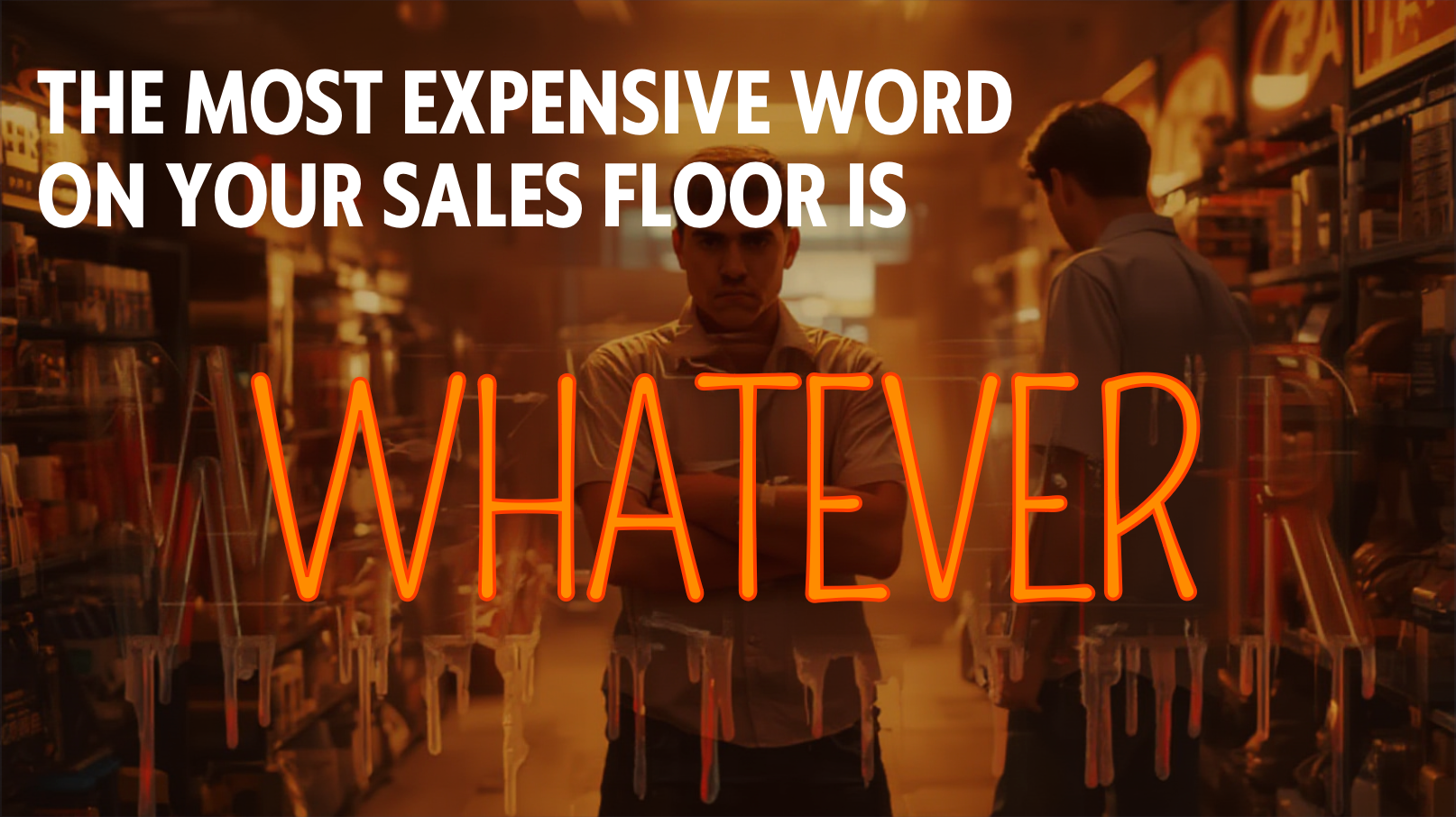
There is one word quietly killing smoke shop revenue every single day.
It’s not “discount.”
It’s not “cheap.”
It’s not “slow.”
It’s not “cheap.”
It’s not “slow.”
It’s “whatever.”
And it shows up in dozens of different ways.
What “Whatever” Actually Sounds Like
Most employees don’t literally say the word “whatever.”
They communicate it.
“Whatever” sounds like:
-
“It’s up to you.”
-
“Whatever you want.”
-
“Doesn’t really matter.”
-
“Either one’s fine.”
-
“Most people just grab this.”
-
“That one’s okay too.”
-
“It’s all pretty much the same.”
Every one of those phrases hands authority back to the customer and removes the employee from the sale.
That’s not helping.
That’s abandoning.
Why ‘Whatever’ Feels Safe to Employees
Employees default to “whatever” language because:
-
it avoids responsibility
-
it avoids rejection
-
it avoids making a wrong recommendation
-
it avoids sounding pushy
-
it avoids confidence
In their mind, “whatever” feels polite.
In reality, it feels unprofessional.
Why Customers Hate ‘Whatever’ (Even If They Don’t Say It)
Customers walk into smoke shops already unsure.
They’re thinking:
-
“Am I buying the right thing?”
-
“Is this legal?”
-
“Is this worth it?”
-
“Do they know what they’re talking about?”
When an employee says “whatever,” the customer hears:
“I don’t know.”
“I don’t care.”
“You’re on your own.”
That kills trust instantly.
Why ‘Whatever’ Destroys Average Ticket Size
“Whatever” language causes customers to:
-
choose the cheapest option
-
buy only one item
-
skip accessories
-
avoid premium upgrades
-
rush decisions
-
leave unsure
It removes guidance — and guidance is what creates value.
The Authority Gap Most Owners Ignore
Sales are about authority, not pressure.
Authority says:
“I’ve done this before. I know what works.”
“Whatever” says:
“I don’t want to be responsible.”
Authority increases spend.
“Whatever” decreases it.
“Whatever” decreases it.
Why Owners Accidentally Train ‘Whatever’
Owners reinforce “whatever” behavior when they say things like:
-
“Just don’t pressure people.”
-
“Let them decide.”
-
“I don’t want it to feel salesy.”
-
“Be chill.”
Employees hear:
“Don’t lead.”
So they stop leading.
The Difference Between Guidance and Pressure
Pressure feels like:
-
rushing
-
pushing one option
-
ignoring objections
Guidance feels like:
-
calm confidence
-
clear recommendations
-
structured options
“Whatever” is neither.
It’s absence.
Where ‘Whatever’ Shows Up Most Often
Watch for it in these moments:
1. When Presenting Options
Bad:
“You can do this one or that one, whatever.”
Good:
“For what you described, these are the three that make the most sense.”
2. When Talking About Price
Bad:
“It just depends what you want to spend.”
Good:
“This one lasts longer and hits smoother — that’s why most people choose it.”
3. When Handling Hesitation
Bad:
“It’s totally up to you.”
Good:
“Based on what you told me, this is the best fit.”
4. When Offering Add-Ons
Bad:
“Do you want anything else?”
Good:
“Before you check out, most people grab this so it works properly.”
Why Removing ‘Whatever’ Raises Sales Immediately
When “whatever” language disappears:
-
employees sound confident
-
conversations move forward
-
customers feel supported
-
decisions happen faster
-
attachments feel normal
-
premium options sell
Nothing about inventory changes.
Execution does.
How Owners Should Eliminate ‘Whatever’ From the Floor
This is not a meeting problem.
It’s a language correction problem.
Step 1: Call It Out in Real Time
When you hear it, correct it immediately.
Not emotionally.
Not aggressively.
Not aggressively.
Just:
“Don’t say ‘whatever.’ Make a recommendation.”
Step 2: Replace It With Default Language
Employees need replacement phrases.
You must give them what to say instead.
Examples:
-
“For most people, this works best.”
-
“Based on what you said, I’d recommend this.”
-
“This is the one I’d start with.”
Step 3: Reward Direction, Not Hesitation
Praise employees when they:
-
lead calmly
-
make recommendations
-
guide decisions
They’ll repeat what gets reinforced.
Why This Matters More Than Ever
As customers get more confused and categories shift, leadership matters more.
Confused customers don’t want options.
They want direction.
And direction cannot come from “whatever.”
The Owner’s Responsibility
If “whatever” exists on your floor, it’s not an employee problem.
It’s a leadership gap.
Because language becomes culture.
And culture becomes revenue.
Final Thought
“Whatever” feels harmless.
It isn’t.
It’s the sound of money leaving your store.
Replace hesitation with guidance.
Replace passivity with confidence.
Because customers don’t come to smoke shops for choices.
They come for answers.