If I had a dollar for every smoke shop owner who told me,
“Man, traffic is just slow right now,”
I’d never need to sell another book, course, or consultation.
“Man, traffic is just slow right now,”
I’d never need to sell another book, course, or consultation.
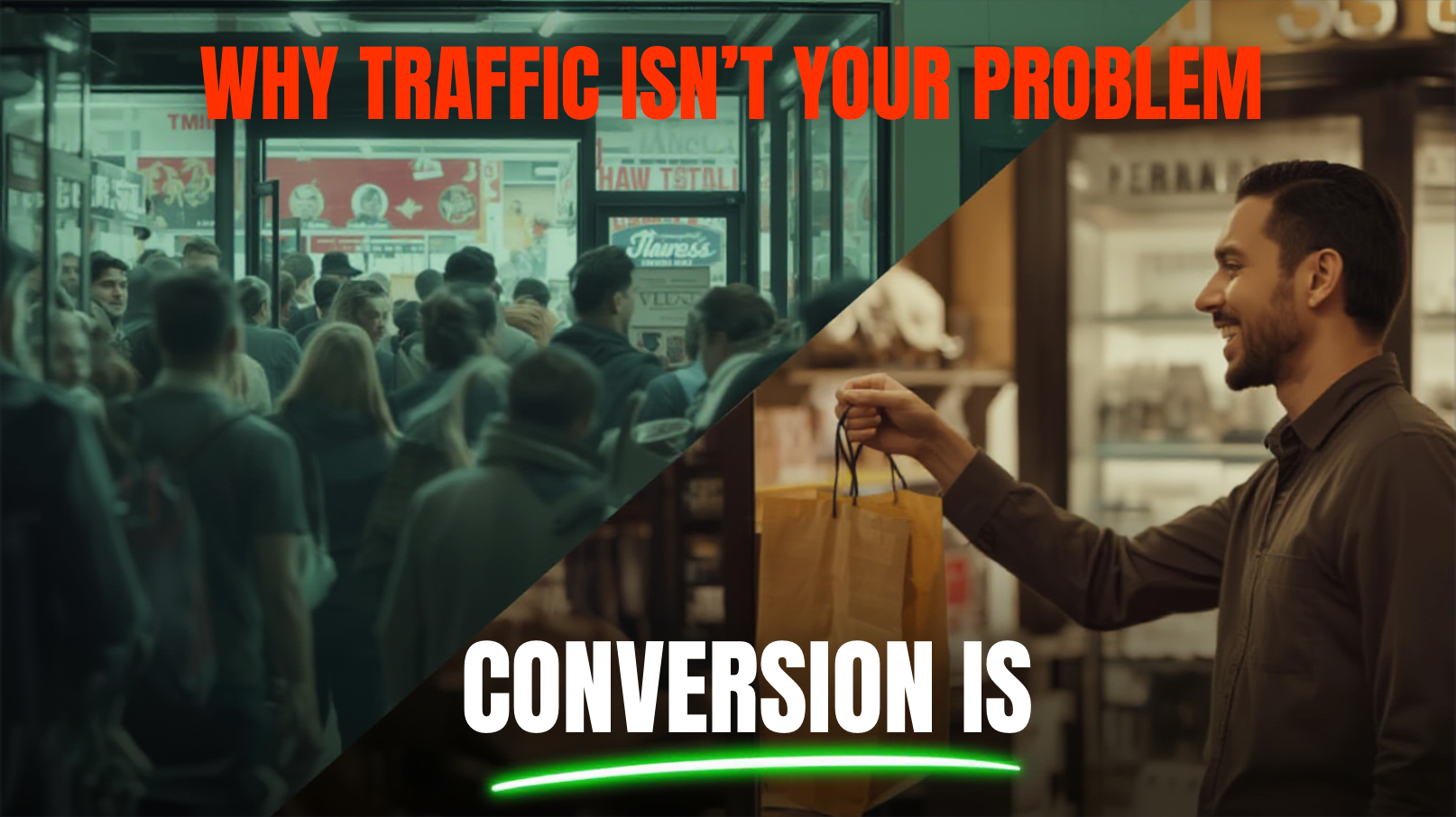
Because in most cases, traffic is not the problem.
The problem is what happens after people walk through your door.
The Biggest Lie Owners Tell Themselves
When sales dip, owners almost always blame one of these:
-
foot traffic
-
the economy
-
the weather
-
the laws
-
competition
-
marketing
Those things are convenient excuses because they’re outside your control.
But here’s the uncomfortable reality:
If people are walking into your store and leaving without buying — or buying the bare minimum — you have a conversion problem, not a traffic problem.
And conversion problems are 100% fixable.
What “Low Conversion” Actually Looks Like in a Smoke Shop
Low conversion doesn’t always mean people leave empty-handed.
It usually looks like:
-
customers browsing forever
-
one-item purchases
-
no accessories attached
-
cheapest option chosen
-
employees waiting instead of engaging
-
conversations starting too late
-
“Just looking” customers walking out
-
lots of register noise, little profit
The store feels busy…
But the numbers don’t reflect it.
But the numbers don’t reflect it.
That’s a conversion leak.
Why Traffic Is the Wrong Metric to Obsess Over
More traffic doesn’t fix bad execution.
It amplifies it.
If your conversion rate is weak:
-
more traffic = more missed opportunities
-
more traffic = more overwhelmed employees
-
more traffic = more chaos on the floor
-
more traffic = more customers walking out unimpressed
Marketing brings people in.
Sales turns them into revenue.
Sales turns them into revenue.
If the second part is broken, the first part doesn’t matter.
The Silent Killer: “They Didn’t Need Anything”
Owners say this all the time:
“They just came in to look.”
“They didn’t really need anything.”
“They were just browsing.”
No.
They weren’t converted.
Browsing is not a customer trait — it’s a sales floor failure.
Customers browse when:
-
no one engages them
-
employees don’t guide
-
options aren’t framed
-
confidence isn’t projected
-
the store doesn’t feel directed
Browsing is what happens when the sales floor is passive.
Why Smoke Shops Are Especially Vulnerable to Conversion Problems
Smoke shops have three built-in challenges:
-
Customers are often unsure or overwhelmed
-
Product categories can be confusing
-
Employees are afraid of sounding “salesy”
That combination creates the perfect storm for low conversion.
If your employees don’t take control early, customers default to:
-
wandering
-
grabbing one safe item
-
or leaving entirely
That’s not the customer’s fault.
That’s the floor.
The Difference Between Foot Traffic and Buying Intent
Here’s something most owners miss:
People walking into your shop already have intent.
It might not be specific, but it exists.
Nobody casually walks into a smoke shop for fun.
Your job is to capture and shape that intent.
If you don’t, it fades.
Why Employees Miss Conversion Opportunities
Employees miss conversions because:
-
they wait too long to engage
-
they don’t know what to say
-
they’re afraid of rejection
-
they don’t want to interrupt
-
they’re unsure how to guide
-
they default to “let me know if you need anything”
That one sentence kills conversion more than almost anything else.
It hands control back to the customer and removes the employee from the equation.
What High-Conversion Shops Do Differently
High-conversion shops don’t feel aggressive.
They feel intentional.
Here’s what’s different.
1. Engagement Happens Early
The earlier a conversation starts, the higher the conversion.
Once a customer locks onto a product alone, your influence drops.
High-conversion shops engage:
-
within seconds
-
before browsing turns into wandering
-
before decisions are made
2. Employees Lead Instead of Waiting
High-conversion employees don’t ask permission to help.
They guide.
They ask questions that narrow choices instead of opening endless options.
3. Customers Are Walked, Not Pointed
Pointing creates distance.
Walking creates connection.
Connection increases conversion.
4. Options Are Framed Intentionally
One option feels risky.
Ten options feel overwhelming.
Ten options feel overwhelming.
Three options feel safe.
High-conversion shops control how choices are presented.
5. Attachments Are Normalized
High-conversion shops don’t “try” to sell accessories.
They assume they’re part of the purchase.
And customers follow that lead.
Why “Just Looking” Is Not a Dead End
When a customer says:
“I’m just looking.”
That’s not a rejection.
That’s a request for guidance without pressure.
Low-conversion employees back off.
High-conversion employees reframe.
They stay present without hovering.
The Owner’s Role in Conversion (This Is Non-Negotiable)
Conversion is not an employee personality issue.
It’s a leadership issue.
Owners must:
-
define engagement expectations
-
train opening language
-
correct passivity immediately
-
observe real interactions
-
remove “wait and see” behavior
-
enforce floor movement
-
coach confidence
If you don’t define how conversion happens, it won’t.
Why Conversion Fixes Revenue Faster Than Marketing
Marketing costs money.
Conversion fixes don’t.
When conversion improves:
-
average ticket rises
-
attachments increase
-
customers buy faster
-
less traffic is needed
-
stress decreases
-
revenue stabilizes
You don’t need more people.
You need better execution with the people already coming in.
How to Tell If Conversion Is Your Real Problem
Ask yourself:
-
Do customers leave without interaction?
-
Do employees wait behind the counter?
-
Do most tickets have only one item?
-
Do add-ons feel optional or rare?
-
Does sales vary wildly by shift?
If yes, traffic isn’t the issue.
Conversion is.
Final Thought
Traffic is easy to blame.
Conversion is harder to face — because it’s internal.
But the shops that survive pressure don’t chase more people.
They make the most of the people they already have.
Fix conversion first.
Everything else gets easier after that.