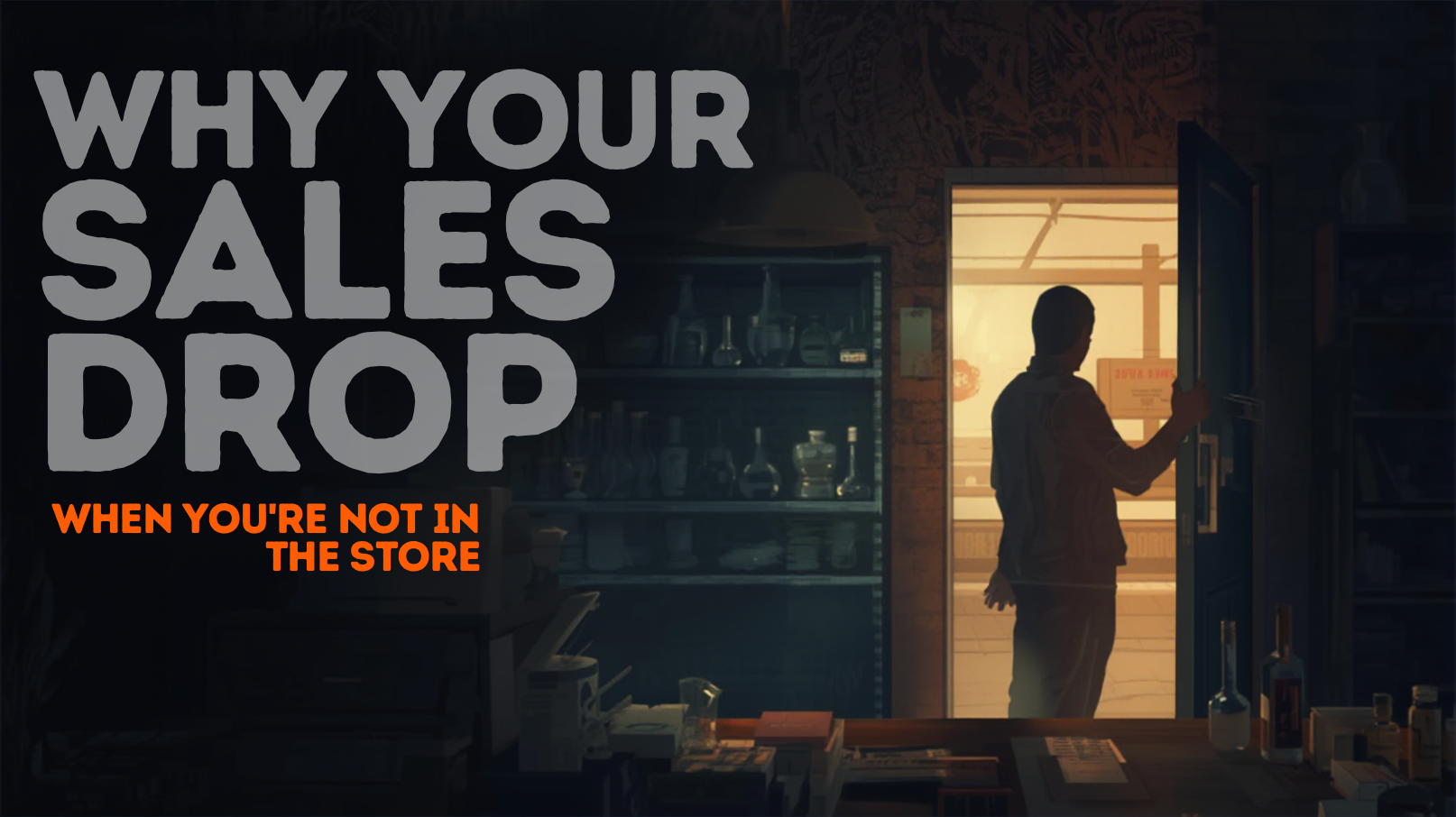
If your sales magically dip the moment you’re not physically in the building, you don’t have a business.
You have owner dependency.
And owner dependency is one of the most dangerous, exhausting, and expensive problems a smoke shop can have.
The Pattern Most Owners Pretend Not to See
You’ve seen this before:
-
You work the floor → sales look solid
-
You take a day off → sales feel soft
-
You leave early → average ticket drops
-
You go out of town → chaos
And the excuse is always something like:
-
“It was slow today.”
-
“Different crowd.”
-
“Bad timing.”
-
“Employees were off.”
No.
Your presence is compensating for a broken system.
Why Owner-Dependent Shops Feel ‘Fine’ Until They Don’t
Owner dependency sneaks up on you because:
-
revenue doesn’t crash immediately
-
employees still show up
-
customers still buy something
-
the store stays open
So it feels manageable.
Until:
-
you want time off
-
you want to scale
-
you want another location
-
you get sick
-
you burn out
Then the weakness becomes obvious.
What Owners Accidentally Do When They’re On the Floor
Most owners don’t realize they do this:
-
step in when employees hesitate
-
naturally guide conversations
-
attach accessories without thinking
-
handle objections smoothly
-
project confidence automatically
-
keep the floor moving
Employees rely on that.
Not intentionally — subconsciously.
And when you’re gone, the floor loses its anchor.
Why “They Just Don’t Care Like I Do” Is the Wrong Conclusion
Owners often say:
“They don’t care like I do.”
Of course they don’t.
It’s not their business.
But that’s not the problem.
The problem is:
they were never trained to operate without you.
they were never trained to operate without you.
Care is not a system.
Training is.
The Real Reason Sales Drop Without You
Sales drop when you’re gone because:
-
decisions become slower
-
confidence drops
-
employees hesitate
-
attachments disappear
-
conversations shorten
-
nobody corrects bad habits
-
standards loosen
Your presence was enforcing standards — not the system.
Why Owner Presence Is a Crutch, Not a Solution
Being on the floor constantly feels productive.
But if your presence is required for performance, you’ve built a fragile operation.
Strong shops don’t need the owner to:
-
start conversations
-
enforce standards
-
close sales
-
protect ticket size
They need systems that do that automatically.
The Difference Between “Helping” and “Masking”
There’s a difference between:
-
helping your team improve
-
masking their lack of structure
If sales only work when you’re present, you’re masking.
And masks eventually fall off.
How to Tell If Your Shop Is Owner-Dependent
Answer these honestly:
-
Do sales vary wildly by shift leader?
-
Does average ticket drop when you’re gone?
-
Do employees freeze without you nearby?
-
Do standards slide when you leave?
-
Do you feel guilty taking time off?
-
Do you dread vacations?
If yes, you have an owner-dependency problem.
Why This Kills Scalability
You cannot:
-
open a second location
-
grow revenue predictably
-
reduce stress
-
step back strategically
…if the business only works when you’re there.
Owner dependency traps you inside the store.
The Fix Is Not “Caring More”
You don’t fix owner dependency by:
-
working more hours
-
being stricter
-
hovering
-
threatening
-
micromanaging
That just deepens the dependency.
You fix it by building systems that replace you.
What Owners Must Remove Themselves From
To fix this, owners must stop being:
-
the best salesperson
-
the only enforcer
-
the main closer
-
the sole source of confidence
-
the last line of decision-making
Your goal is not to be irreplaceable.
Your goal is to make the business run without you.
How to Start Breaking Owner Dependency
This happens in steps — not overnight.
Step 1: Standardize Sales Behavior
Employees must follow:
-
the same opening
-
the same flow
-
the same option presentation
-
the same attachment process
No freelancing.
Step 2: Stop Saving Sales
Let employees struggle — briefly.
Then coach.
If you always jump in, they never grow.
Step 3: Promote Systems, Not Stars
Reward:
-
consistency
-
system adherence
-
execution
Not just “big sales days.”
Step 4: Remove Yourself Gradually
Start with:
-
one shift
-
then a day
-
then a weekend
Watch what breaks.
Fix that — not the symptoms.
Why Strong Shops Feel the Same No Matter Who’s Working
In strong shops:
-
customers get the same experience
-
average ticket stays consistent
-
attachments happen naturally
-
confidence feels uniform
-
standards don’t depend on mood
That’s not culture.
That’s systems.
The Owner’s Real Upgrade Path
Your evolution as an owner is:
-
Worker
-
Top Seller
-
Floor Leader
-
Trainer
-
System Builder
Most owners get stuck at #3.
Real growth starts at #5.
Why This Matters More Than Ever
As laws tighten and margins compress, you cannot afford owner dependency.
You need:
-
repeatable execution
-
predictable sales
-
trained confidence
-
leadership without presence
That’s how you survive pressure.
Final Thought
If your shop only works when you’re there, it doesn’t really work.
It’s just borrowing your energy.
Build systems strong enough to stand without you.
That’s how real businesses are built — and how owners finally get their time back.